
Mestre in the Republic of Venice
Pages dedicated to the history of our city:
II. Mestre territory of the Republic of Venice (1337 - 1797)
The Scaligero danger
Verona's expansion brought the Scaligeri, starting in 1317, into conflict with Treviso, which immediately took action, among other things reinforcing the castle of Mestre. Indeed, in 1318, the Veronese attempted several times to conquer the fortress, which, however, held out against all odds. After conquering the cities of Padua and Treviso, however, in 1323, Mestre nevertheless passed to the Veronese dominion of Cangrande della Scala , along with all the territories of the Marca Trevigiana.
The Scaligeri dominion, now so close to the lagoon, thus began to pose a serious threat to Venetian independence. At this point, it became crucial for Venice to gain control of its hinterland to counter Verona's excessive power and defend its commercial interests on the mainland. Mestre Castle
was one of the first targets of this operation: as early as 1336, the Venetians sent an expeditionary force of approximately 500 men-at-arms to capture it, but without success. They then attempted to gain possession of it through deception and treachery by bribing the captain of Mestre, who, however, despite having given his wife and son as hostages to the Venetians, revealed the Venetians' plan to attack to Alberto della Scala, who was in Padua. Alberto then ambushed them and massacred them on the agreed-upon night to open the castle gates to them.
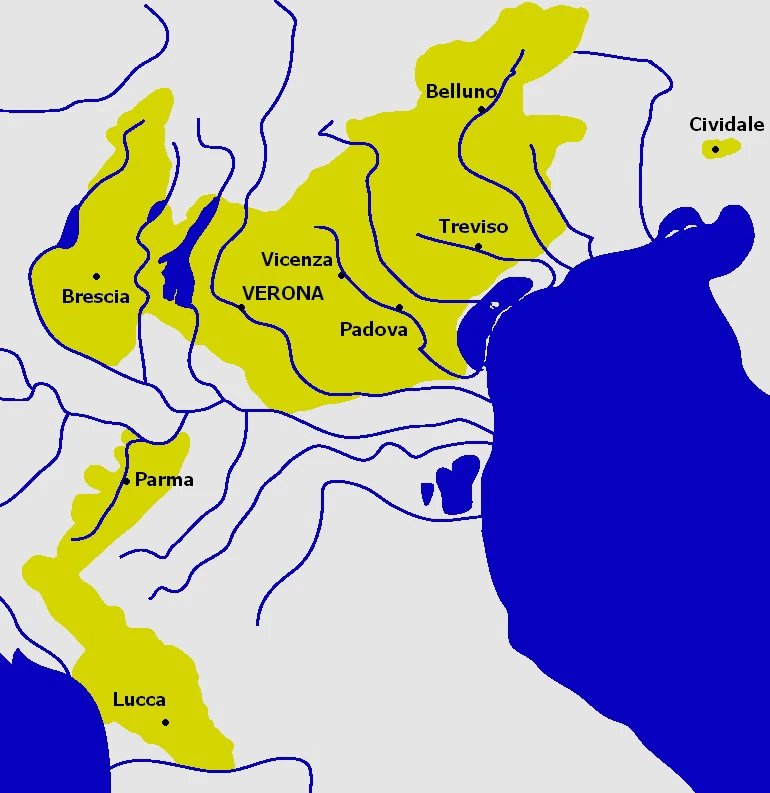
Scaliger domains at the time of maximum expansion (1336)
It was only on September 29, 1337, that the commander of the Venetian armies, Andrea Morosini , managed to bribe the 400 German mercenaries who were supposed to defend the castle on behalf of the Scaligeri with 10,000 florins. They killed their commander and handed Mestre over to the Venetians without a fight. From then on, September 29, the day of Saint Michael the Archangel, patron saint of Mestre, became a city holiday. Venetian expansion soon led to the occupation of Treviso on December 2, 1338, leading to the signing of peace between Venice and Verona on January 21, 1339.
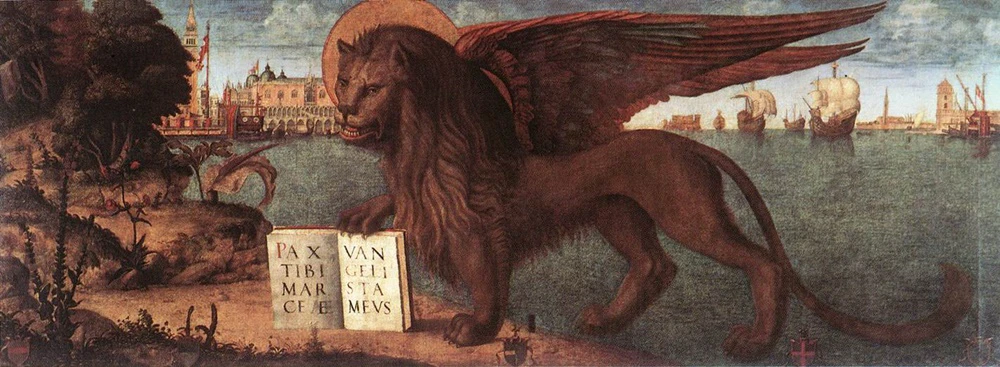
"The Lion of St. Mark", Vittore Carpaccio, 1516
The vigorous lion of St. Mark, symbol of Venice and the Republic, is depicted with its hind legs in the water and its front legs on dry land, a clear reference to the ambivalent policy of the Serenissima in those years, now oriented towards expanding on dry land
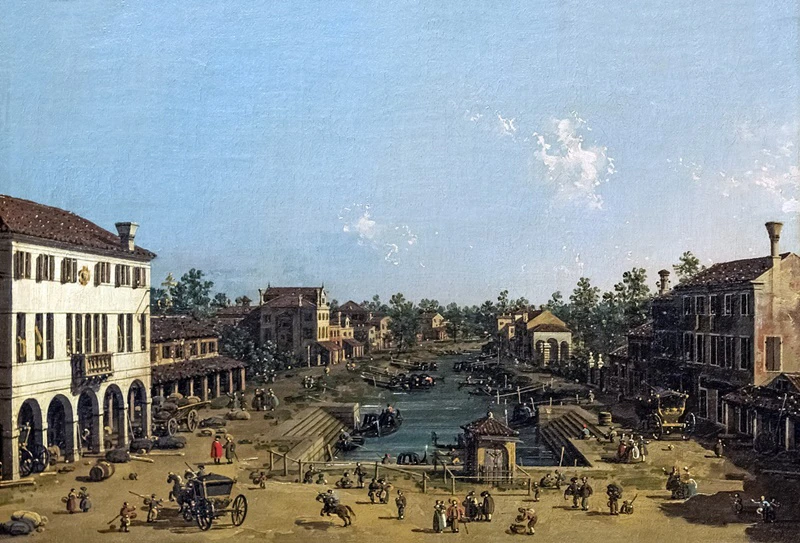
"Master at the Boats" by Giovanni Antonio Canal, known as Canaletto. Painting from the mid-eighteenth century.
The documents
Beginning in 1338, the government of the Commune Veneciarum sent a podestà (chief magistrate) to the new territory of Mestre, initially subject to the Rectory of Treviso. Only later was a rector sent from Venice, with the title of podestà and captain , who simultaneously held civil, judicial, financial, and military functions, and a castellan (castellan) responsible for the control and custody of the castle, including garrison duty.
Like the other rectors of the various rectories of the mainland and maritime domains, he was a patrician chosen by the Great Council through a special designation and election, and held office for 16 months. He was required to reside in the seat assigned to him, under penalty of dismissal. He was required to keep public expenditures to a minimum as much as possible. Finally, he was required to submit an official report at the end of his term, informing the authorities of his actions and of the events that had occurred in the Rectory during his reign.
This was a period of great commercial expansion for the city, thanks to the trade between Mestre and Venice, which had become so important that it required the construction, in 1361, of an artificial canal, the Canal Salso , which ran from the lagoon to the heart of the city. The new connection became even more important after the diversion of the Marzenego
River towards Altino , which made it impassable for Mestre's waterborne trade. For these reasons, during this period, trade shifted from the northern part of Mestre to the southern part, contributing to the development of the new commercial area around Piazza Maggiore, while the activity of the port of Cavergnago at the mouth of the Marzenego River gradually declined. Beyond commercial activity, the canal also assumed strategic importance for Venice's ability to defend its territories, allowing its troops to quickly reach the mainland in times of need.
Related articles:
"The Podestà of Mestre from 1338 to 1797" edited by Emiliano Balistreri;
"The Podestà - Captain and the Civic Council" edited by Sergio Barizza.
The fortified city
The increased strategic position of Mestre made it necessary to build a new and larger fortress: the Castelnuovo , which was followed by a progressive abandonment of the Castelvecchio , which was finally demolished in the 15th century. The new defensive complex arose further east of the Castelvecchio (which was on the site of the Roman Castrum ) and to the north of the village, where previous defensive towers already existed: tower-houses belonging to the noble families of the area, including the Counts of Collalto.
The new fortress proved essential for Venice in 1509, during the War of the League of Cambrai . The alliance including the major European powers of the time ( the Holy Roman Empire , France and Spain , as well as the Duchy of Ferrara and the Papal State ), forced the Venetian forces to evacuate the Domini di Terraferma in the Po-Veneto hinterland after the defeat in the Battle of Agnadello . The retreating Venetian troops barricaded themselves in the castle of Mestre , which became the lagoon's last defensive bastion on the mainland, and from where expeditions would depart to relieve besieged Treviso and to reconquer Padua, occupied by the Imperials.
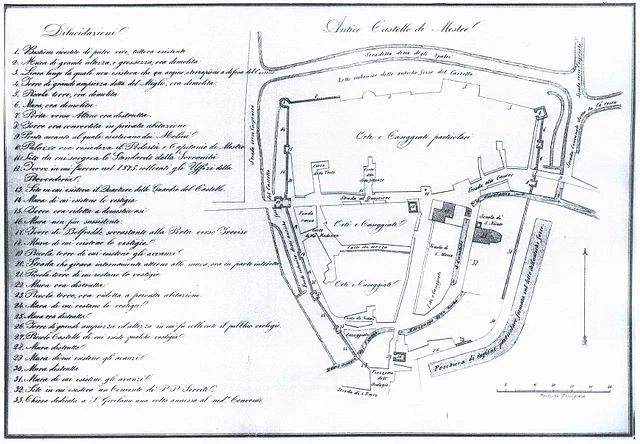
Map of Castelnuovo di Mestre
In the years that followed, however, the political situation changed: Pope Julius II believed that France posed a far greater threat to the balance of power on the Italian peninsula than Venice. Thus, the Papal States abandoned the League of Cambrai to ally themselves with the Serenissima , and with it also Spain and the Holy Roman Empire, thus leading to the creation of the Holy League against France.
Despite the successes of the new Holy League, however, disagreements erupted between Venice and the Emperor, who refused to hand over the Venetian cities in his possession. Thus, in 1513, Venice sided with the French, who were able to retake Milan, but consequently, allowing the Germans to once again invade the Veneto.
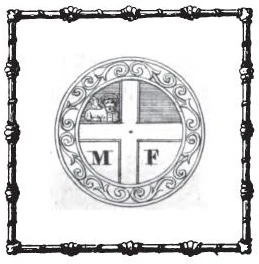
Civic coat of arms of Mestre bearing the letters MF (Mestre Fidelissima)
Having reached the gates of Mestre in 1513, the Germans and Spanish besieged the city and finally conquered the castle, sacking and burning the town. On this occasion, in honor of its heroic resistance, the city received the title of Mestre Fidelissima from the Serenissima , which remains its motto to this day. At the end of the war, the Senate's concerns regarding the mainland turned to the problems of rebuilding the walls, houses, and villages, and to solving the hydrographic problems aimed at organizing and channeling the rivers, since the constant transport of debris posed a serious risk of silting up the lagoon. From then on, Mestre remained untouched by war until the fall of the Republic, so much so that its walls fell into disuse. By then, severely weakened and rendered useless by new warfare techniques, they were demolished in the 18th century: only the Clock Tower (the ancient Porta di Borgo ) and its twin Belfredo Tower remained , which was also demolished in the 19th century.
With the fall of the Venetian Republic in May 1797, Mestre, along with the rest of the Venetian mainland, was occupied by Napoleon Bonaparte 's troops , thus putting an end to the rule of the last Venetian podestà and captain, Daniele Contarini.
Read the other chapters
I. From the first evidence of the birth of Mestre to the medieval period (up to 1337)
II. Mestre territory of the Republic of Venice (1337 - 1797)
III. Mestre after Napoleon, the Austrian Empire and the Kingdom of Italy (1797 - 1866)
IV. Mestre during the twentieth century and the modern era (1866 - today)
These texts are intended for the widest possible audience and are intended as a general introduction to the city's history.
Despite our efforts, we cannot presume to have made no mistakes: we are open to corrections and observations, which you can send us via our contact form.