
The birth of Mestre and the medieval period
Pages dedicated to the history of our city:
I. From the first evidence of the birth of Mestre to the medieval period (up to 1337)
The origins
According to legend, attributed to Bonaventura Barcella , secretary of the Municipal Archives in the 19th century, the origins of Mestre are closely linked to the events of the hero Antenor , founder of the Venetians and founder of Padua after fleeing the destroyed Troy. Among his followers was the valiant warrior Mesthle , son of Talemenes, king of Maeonia, who settled instead in a wooded area facing the Venetian Lagoon, the mythical Selva Fetontea, founding a fortified city that he named Mestre after himself
Another hypothesis could derive the name Mestre more specifically from the " Gens Mestria ", a tribe widespread in Romagna during the Roman period. They owned at least one kiln and left behind fragments of artifacts with stamps imprinted on bricks and on at least one amphora reading MESTRO, C.MESTRORUM, P.MESTRI, preserved in local museums (Cattolica, Rimini, San Giovanni in Marignano). At least one epigraph was found in Concordia Sagittaria and is now in the Concordia National Archaeological Museum in Portogruaro.
However, given the scarcity of artifacts and information regarding ancient times, the true origins of Mestre remain uncertain. The toponym's origins remain debated, although it is likely of Paleo-Venetian origin.
Paleo-Venetian colonization, first followed by Roman colonization, does not appear to have left any particular trace of urban settlements in this rural area. However, a hypothesis has been developed according to which there existed an oppidum , a Roman fortified locality, later destroyed by Attila and on whose ruins the first medieval castle, the Castelvecchio , was later built .
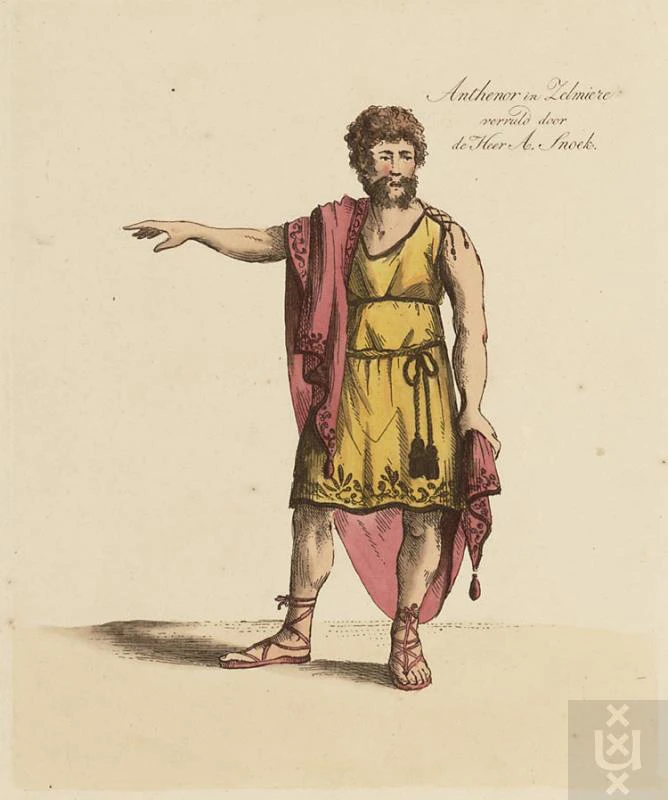
Antenor, according to legend the founder of Padua and founder of the Venetians
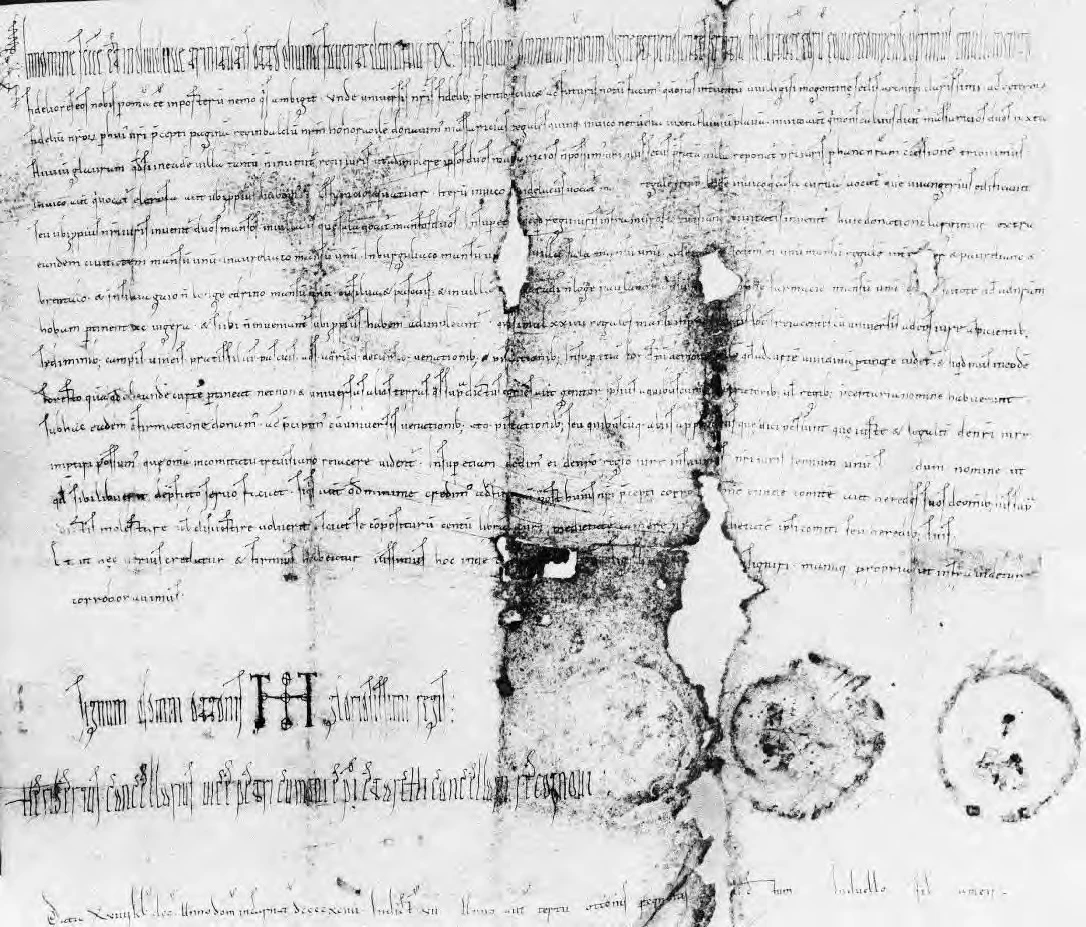
Diploma of Emperor Otto III investiture of Raimbaut, 994
The documents
The oldest officially recognized document clearly bearing the name of Mestre is the deed of gift with which in the year 994 Otto III , who two years later would become Emperor of the Holy Roman Empire , intended to thank his faithful leader Rambaldo, a member of the Counts of Collalto family, for the services rendered.
In this document, the faithful vassals were registered in the names of the Montello forest, some properties in Treviso and 24 "mansi" (large tracts of arable land), including one " inter Mester et Paureliano et Brentulo ", that is, between Mestre and present-day Gazzera (Parlan and Brendole).
The official deed is the subject of a curious story:
the parchment remained in the hands of the Collalto family until 1917, when the castle was destroyed during the First World War. It was probably later recovered from the ruins by one of the Bohemian soldiers, subjects of Vienna, and used to strengthen their battered boots in preparation for the return to their hometowns, mostly on foot, after the defeat. The document, having arrived in such a wretched state in the Czech Republic, was initially deposited, along with other stolen items, in the local municipal archives of Rokycany, located near Pilsen, without anyone realizing its extraordinary historical value. Only later did the archives manager realize its historical importance and highlight it.
Today, Otto III's diploma is the oldest parchment document in the Czech Republic, and a copy of it was delivered to the municipality of Mestre-Carpenedo for display in the Town Hall on Via Palazzo.
Mestre may also be mentioned for the first time in a document from 710 regarding donations to the monastery of San Teonisto di Casier. In this case, however, the document mentions an uncertain " Mestrina presso le montagne ."
Roman Master
The few finds discovered in the Mestre area (some amphorae, roof tiles, traces of paving and some rare coins) offer little evidence of the presence of the Romans.
Some, however, identify the presence of a settlement in the citations respectively in the Burdigalense Itinerary , which would indicate it with the definition of " mutatio Ad Nonum " 12 miles from the " mutatio Ad Duodecimum " and 81 miles from Altino, and in the Tabula Peutingeriana which would identify it with Ad Portu(m) .
Aerial photogrammetry would have revealed the presence of strips of Roman road both near the locality called "Ponte di Pietra" in San Giuliano and in Mestre, a sign of the existence of two road routes: one to the right of the Brenta, described by the Tabula Peutingeriana , and one to the left, described by the other Itinerary . In fact, two consular roads could have passed through the territory of present-day Mestre: the Annia and the Popilia .
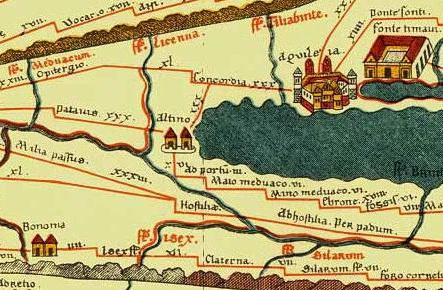
Tabula Peutingeriana
However, there are no clear references to these consular roads, which presumably met in the present-day area between the Brenta Riviera and the Mestre mainland. It is certain, however, that the area of present-day Mestre was crossed by another important Roman road: the Via Gallica. At that time, however, the area was mostly marshy, so much so that the Roman roads, which were built in a straight line all the way to Mira, were winding downstream to adapt to the terrain.
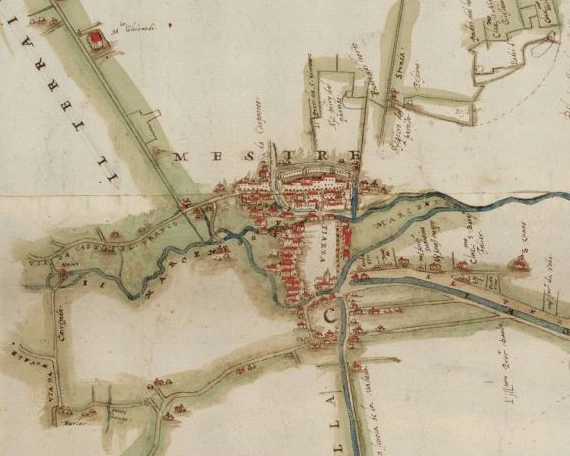
The Middle Ages: the Treviso period
After the fall of the Roman Empire, the area fell within the feudal territories of the Lombard Duchy from 568 and the Carolingian Empire of Treviso from 774.
The agricultural and commercial town of Mestre began to gain importance during this period thanks to the development of a commercial activity, the Port of Cavergnago , which was also closely linked to the economic development of nearby Venice.
A strategic location for connections with the lagoon, three important arteries connecting the hinterland passed through here at the intersection: the Padovana (now Miranese), the Castellana (towards Castelfranco), and the Terraglio (connecting Mestre to Treviso).
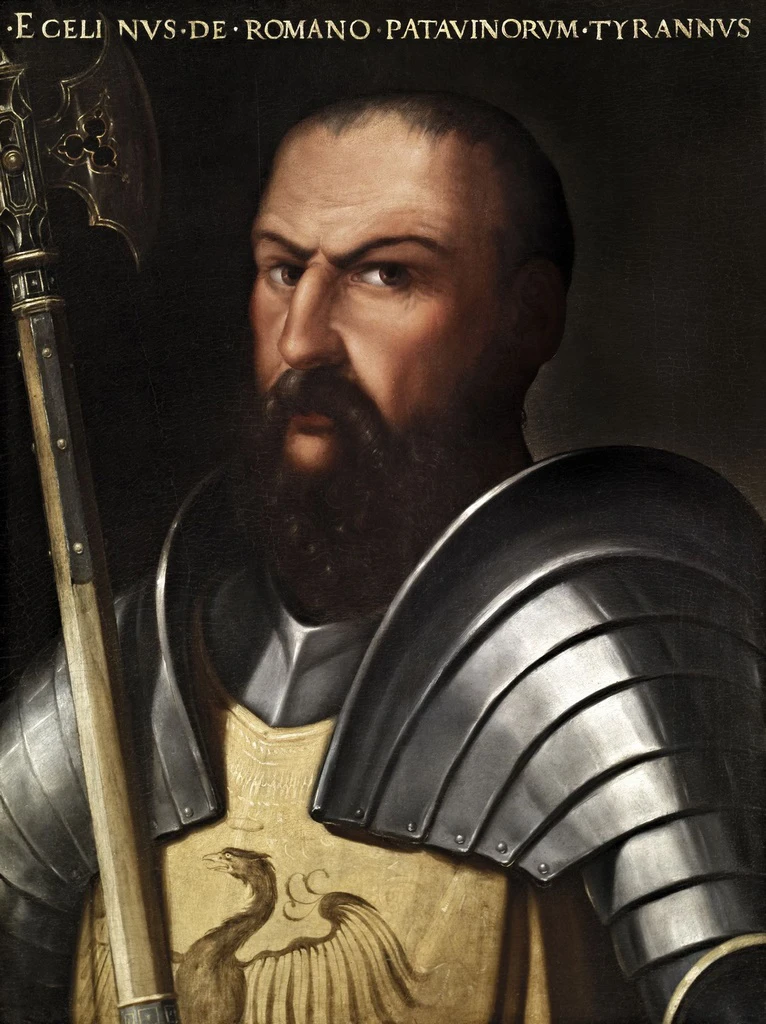
In 905, the village, with its adjoining port, became a fiefdom of the Bishop of Treviso, investiture by Emperor Berengario. This power was, however, threatened in the 13th century by the actions of Ezzelino III da Romano .
As early as 1237, Ezzelino's soldiers advanced into the Mestre territory, devastating it, but between 1245 and 1250 they even occupied the castle of Mestre.
The incursions were the result of rivalry with his brother Alberico, who had become mayor of Treviso, but the two eventually reached an agreement: in 1257, the Bishop of Treviso, Adalberto III Ricco, was forced to cede possession of the village and castle to the civil administration of Treviso, which began appointing a captain to exercise administrative, military, and judicial power, thus marking the definitive transition from religious to civil jurisdiction.
In 1317, Cangrande della Scala , Lord of Verona, attacked the territories of Treviso, which immediately took action, reinforcing, among other things, the castle of Mestre. In 1318, the Scaligeri made several attempts to conquer the stronghold, which, however, held out against all odds. In 1323, however, Treviso, exhausted by the long war, surrendered and fell under Veronese rule. Mestre then suffered the same fate, but not for long…
Read the other chapters
I. From the first evidence of the birth of Mestre to the medieval period (up to 1337)
II. Mestre territory of the Republic of Venice (1337 - 1797)
III. Mestre after Napoleon, the Austrian Empire and the Kingdom of Italy (1797 - 1866)
IV. Mestre during the twentieth century and the modern era (1866 - today)
These texts are intended for the widest possible audience and are intended as a general introduction to the city's history.
Despite our efforts, we cannot presume to have made no mistakes: we are open to corrections and observations, which you can send us via our contact form.