
Historical insights
The podestà of Mestre from 1338 to 1797
edited by: Emiliano Balistreri
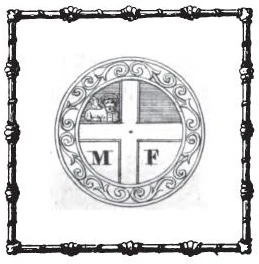
The civic coat of arms of Mestre taken from the anonymous text of 1839
Mestre and its county came into the possession of Venice in 1338 during the war against Mastino II della Scala (1), which began in 1336, and the castle and the village were then formally assigned to the Venetians during the dogeship of Francesco Dandolo by the emperor Louis IV the Bavarian; in fact, already in 1336 the Venetians sent an expeditionary force of around 500 men-at-arms to conquer the castle of Mestre but without success, they then attempted to gain possession of it through deception and treachery by corrupting the captain of Mestre, Tommasino Luchesio from Bologna, who however, despite having given his wife and son as hostages to the Venetians, revealed the plan of the sortie hatched by the Venetians to Alberto della Scala who was in Padua and who therefore massacred them with an ambush on the night agreed upon to open the gates of the castle to them; Subsequently, in January 1337, Alberto della Scala sent Giovanni di Lisano as captain of Mestre, replacing Tommasino. Lisano held the castle even when Padua fell and Alberto was taken prisoner. The Venetians then attempted bribery again and promised 3,000 ducats to the German mercenaries garrisoned in Mestre castle in exchange for the surrender of the fortress. The mercenaries killed the captain and handed the castle over on St. Michael's Day, September 29, to Andrea Morosini, in command of 500 soldiers, who took it over, eliminating a dangerous presence close to the area of the ancient Venetian dogedom.
Therefore, starting in 1338, the government of the Commune Veneciarum sent a podestà to Mestre, subject to the rectory of Treviso (2); the name of the first magistrate sent to fill this position is not known with certainty (Francesco Bon?); Later, a rector was sent from Venice, with the title of podestà and captain, with civil, judicial, financial, and military functions, and a castellan was sent to supervise and guard the castle with garrison duty.
The podestà (3) of Mestre (inferior in rank to the Rector of Treviso, to whom he formally submitted), like the other rectors of the various rectories of the mainland and maritime domains, was a patrician chosen by the Great Council through a special nomination and election and held office for 16 months. He was required to reside in the seat assigned to him under penalty of dismissal, was required to keep public spending to a minimum as much as possible, and was finally required to submit an official report at the end of his term (usually drafted by a professional secretary employed in the state bureaucracy) to inform the authorities of his actions and of the events that had occurred in the rectory during his reign. The podestà and captain was usually also assisted by a chamberlain who was responsible for the economic management of the rectory and the management of tax collection.
In an anonymous text, entitled Historical News on the Castle of Mestre. From its origins to the year 1832. And of its territory , published in 1839 in Venice by Angelo Poggi, whose author is believed to be Bonaventura Barcella, contains a partial and incomplete list of the podestà who succeeded one another from 1391 to 1797, a list which is reproduced here
at the end of the article. Regarding the public office of podestà and captain of Mestre, it should be noted that, although it was not a particularly coveted position, it nevertheless allowed poor patricians to receive a stipend for 16 months and to reside near Venice and, as public officials, to be in contact with the city's noble families who elected those elected to Venice's supreme governing bodies. It follows that the office of podestà of Mestre represented a valuable public office for many patricians.
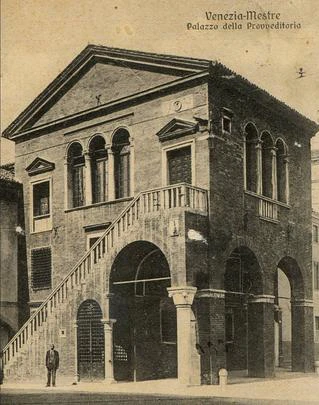
The Mestre Provisional Office (current state)
In 1452 the City Council of the community of Mestre was established, associated with the podestà for the administration of the podestà, a council headed by the provveditori , who had the honorary title of spettabili and who were elected within the City Council from among the families of the Mestre citizens who were part of it by right or aggregated to it by co-optation and enrolled in exchange for a financial contribution (Barcella not only provides the complete list of names and surnames of the provveditori but also that of the families aggregated to the citizenship of Mestre between 1576 and 1866, that is well beyond the fall of the Serenissima, and even the list of notaries practicing in Mestre from the medieval period to 1827; from reading the surnames of the lists and of the many documents copied by Barcella one notes the recurrence of the same families in the number of notaries, of the deputies of the People , of the provveditori(4) and of their secretaries etc.; Zoccoletto explains well the internal dynamics of the Council and the conflicts between the families of the same and with the body of the common people and focuses on the embezzlements perpetrated by various councilors to the detriment of the Community).
From Barcella we learn that the Mestre Community, awarded the title of Magnifica , was divided into four bodies at least since the 17th century, namely clergy, citizens, district and foreigners, and that it included the village and the castle of Mestre as well as the county called "mestrina".
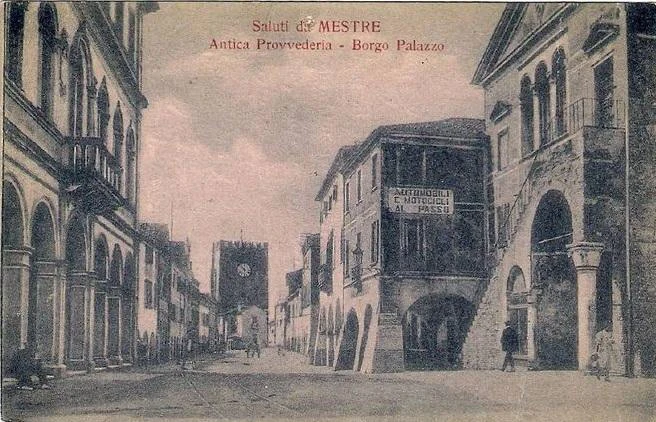
From 1459 the council of the provveditori took up residence in the Provveditoria (5), also called Provvederia , located in the current Via Palazzo in Mestre (therefore within the castle walls), a building whose architectural appearance was modified in 1525 and then in 1926 with some alterations and renovations.
The author of the 1839 volume always reports that Mestre had a Civic Council composed of 30 citizen families and that it was presided over by the podestà; the author believes it probable that the institution of the Council was contemporary and contemporary with the sending of the first Venetian podestà, he also recalls that the Council met on the days of San Stefano and San Giovanni for the nominations to municipal offices, and that it had its headquarters in the current Provveditoria and that, if one of the original families composing its assembly (adult males over 21 years of age and lay people, at least until 1658 when a "part", in the sense of resolution or decree, sanctioned the possibility of admitting ecclesiastics as well), provided for the co-option of another family in exchange for an outlay of 50 ducats following appropriate authorization from the Venetian government; the author recalls that even a Venetian patrician, the nobleman Alvise Emo, in 1659 asked and obtained to be added to this group of city families; we also learn from the same author that there were three provveditori (6) with a one-year mandate with an office in the Provvederia; the provveditori were assisted by a chancellor called de Comun (a notary of the Mestre college) who carried out the task of their secretary and was paid by the Municipality and held office for one year and drew up books with the acts and resolutions of the Council, of the provveditori of Mestre and of the Venetian government; two health commissioners and a health clerk then took care of the administration of this matter in the village and the county, always paid and with an annual mandate; also under the authority of the Municipality were a prison lawyer, some Piovegani and Soprapiovegani (who were responsible for the roads, therefore the maintenance of roads and bridges and the maintenance and cleaning of ditches, etc.), a doctor of conduct with a three-year mandate, also in the pay of the Municipality, and, from 1665, a nuncio (with a five-year mandate) resident in Venice to represent the requests of the Mestre Community; the Council then disposed of the archpriest's church of San Lorenzo and administered its assets through a mayor appointed for this purpose from among the citizens; the Community of Mestre could appoint two knights of the Comun (connected to the management of tax collections) whose qualifications necessary for the appointment were established by the Venetian podestà with a specific "part" and whose election was subject to a two-year default (from 1685); finally, since 1576 the Community's documents and deeds have been systematically archived.
The Provvederia of Mestre (current state and state before restoration) and Via Palazzo with the civic clock tower (formerly part of the Collalto residence) in the background
The building which houses the Provveditoria, a particularly significant and important monument of the still surviving historical and architectural heritage of Mestre, today appears as follows and is composed as follows:
a two-storey body on the ground floor, with a rectangular plan, with a portico with two round arches supported by three brick pillars on the side facing via Torre Belfredo and a brick staircase with steps and parapets with stone columns on the side of via Palazzo which leads to the second floor which is accessed by a rectangular door on whose architrave there is the Latin inscription Consilium Civilium ; the staircase(7), now supported by masonry (a small slit opens in the wall) and by two round arches on stone columns with water-leaf capitals (equipped with 36 stone steps and parapets composed of seven modules of four small columns and a small pillar, works of twentieth-century renovation), stands on the main facade of the Renaissance building which on the ground floor has a rectangular window with a stone frame, on the first floor has another rectangular window with a stone frame in line with the lower one and a rectangular access portal, perhaps the result of a modification after the construction, and a commemorative cartouche plaque with an inscription in Latin on the brick wall, finally on the second floor it has five openings, that is the tympanum access door (above the tympanum of which there is a rectangular stone insert with two coats of arms in mixtilinear shields and a lion of St. Mark in round moeca within a laurel wreath, the latter in metal material probably the result of the restoration of the 1926), the three-light window with small columns and pilasters with capitals with leaves and volutes and triglyphs, surmounted by a decorative stone frame in the form of a string course (but it was originally included in a single slab of which it is perhaps a surviving part), the tympanum window symmetrical to the entrance portal now with a stone parapet but the result of a modification of the window hole whose sill was aligned with the level of the three-light window;
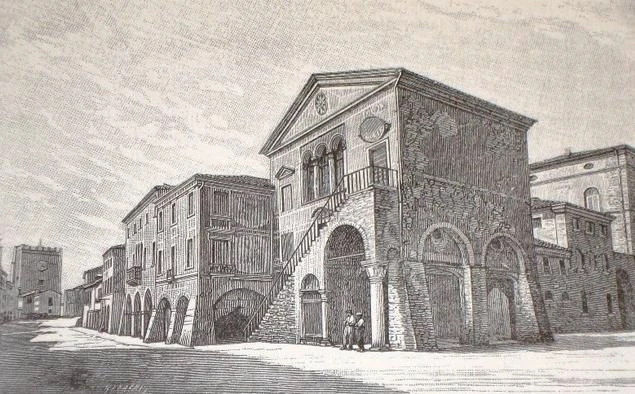
the roof of the building is a gabled roof with two slopes on a triangular moulded front gable from which the perforated rose window has disappeared (see print); the second floor also has on the side facade a three-light window similar to the one on the side of Via Palazzo, originally of Byzantine type with columns and capitals (at least until the early twentieth century) and now with small pillars (in 1909 it also had a projecting terrace on four shaped brackets), as well as a small square window now blind and walled up surmounted by a pitched roof on two brackets which was placed on the other side of the same wall to frame a votive image (?) perhaps removed and lost (or is it the one now on the ground floor within the chapel?), at the top between the wall and the roof there is a bolted beam inserted during the restoration (which is responsible for the encircling of the building), on the wall, to the right of the three-light window, there is another stone coat of arms in Gothic shield; on the courtyard side (Cattapan corner) the building has two rectangular single-lancet windows on the first floor, a blind single-lancet window on the second floor with a round arch, a chimney flue (protruding like a pilaster strip) with a chimney stack on the right slope of the roof; the façade on Via Torre Belfredo has two single-lancet windows and a door on the ground floor and a portico with a wooden coffered ceiling with white and red squares (the original colours of Mestre derived from the Treviso coat of arms) with polymorphic central rosettes,on the walls are large fragments of frescoes depicting, within counter-circles, heraldic emblems with red rampant lions (within white shields) and yellow lions of St. Mark included in blue circles and yellow rampant griffins germinating as many roosters (in white shields), all on a background with vine shoots and vases with vine leaves and bunches of grapes (probably retouched in style during the twentieth-century restoration); the Latin inscription is mouldedOLD RUINS Q OBSOLETUM AEDIFICIUM PETRI ALEXANDRI LIPPOMANI PRET AC PRAEFECTI OPTIMI PROVIDENTIA CIVES MESTRINI PRAESENTI NITORI RESTITUENDUM CURARUNT MDXXV CIVIUM PROVISORIA and twentieth-century plaque with Italian inscription; at the corner of the building a griffin carries a metal lantern on the second floor, on the ground floor the stone column at the corner of the portico which has some inscriptions in Latin ( MEN PASSUS VENETI MOLENDINOR 1586 : or mensura passus veneti molendinorum i.e. the measurement to which those who had to contribute to the mill had to conform and refer) and five notches divided in two as a sample of measurement units (the anonymous author explains that FPLF stands for «Hay, Straw, Wood and Fassi» and that «the Step was divided into 5 feet and subdivided into ounces» (8) ). The various railings and the votive chapel with the Madonna and Child created between the stairs and the portico, with the herringbone brick floor, closed by gates, seem to be the result of tampering after the construction of the building which also shows signs of blind holes following modifications to the same; even all the tie rods present today in many points of the structure are due to consolidation interventions subsequent to the sixteenth-century reconstruction (9).
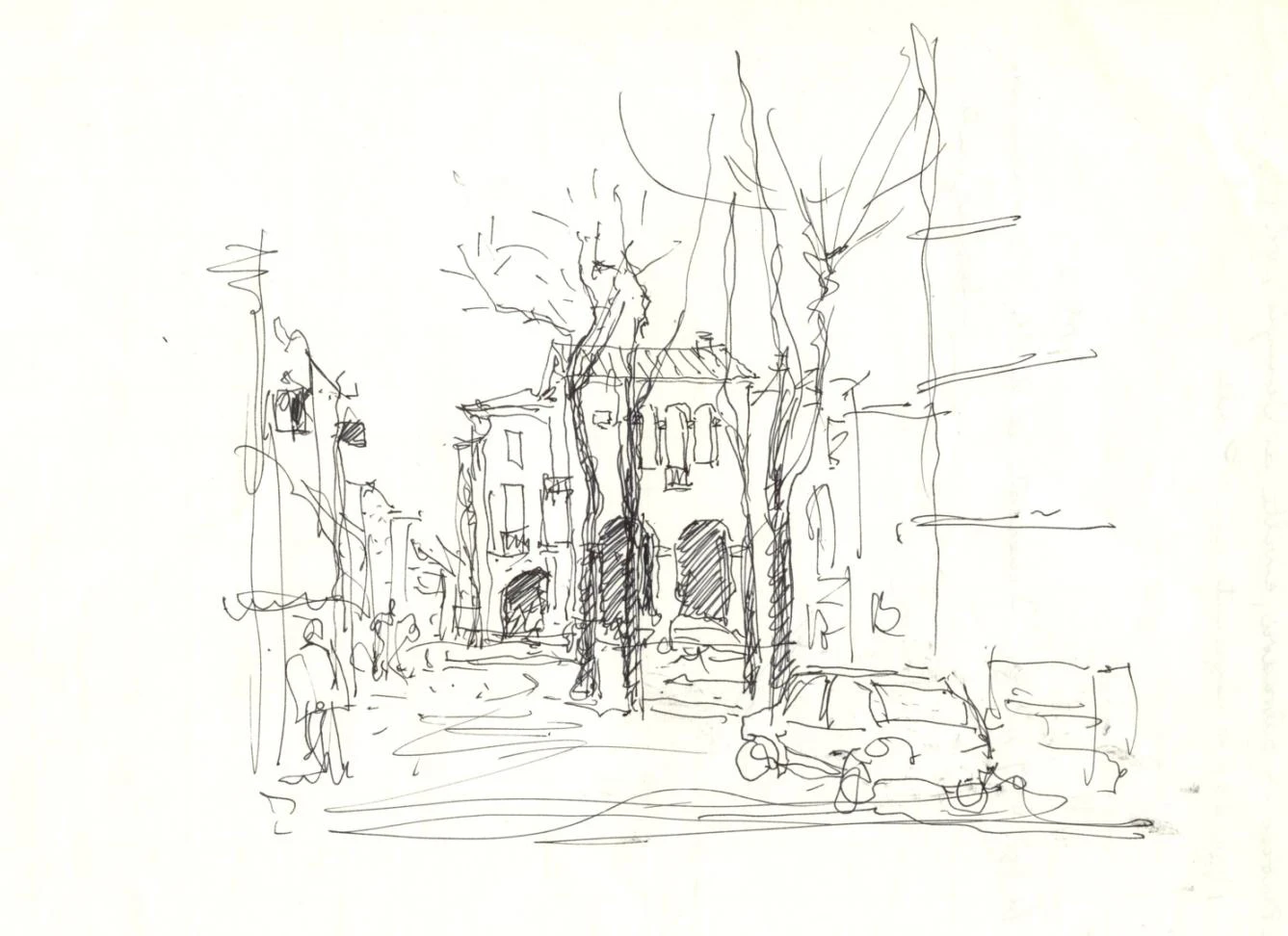
Egle Trincanato, view of the Mestre Provveditoria from Viale Garibaldi, pen and ink drawing on paper, 1990s, Trincanato Collection, IUAV Project Archive
Opposite the Provvederia stands the current Town Hall, formerly the seat of the City Council (Barizza, Gusso). This 16th-century building, whose general external appearance has been largely preserved, has been heavily altered and modified, however, in its internal layout and distribution for the practical needs of its redevelopment into municipal offices.
According to Barizza and Gusso, the palace of the podestà and captain, hence called the Palazzo podesterile or praetorian, was located near the Provvederia, but the authors do not provide its exact cadastral identification. Zoccoletto, however, identifies the building with the current seat of the Mestre Town Hall, and Sbrogiò writes: "Where the town hall now stands, there was the Palazzo del Capitano."
Note:
1 - Can Francesco della Scala, known as Cangrande, having forced Treviso to capitulate in 1329, also came into possession of Mestre, which belonged to the castles under the jurisdiction of the Marca Trevigiana. When Cangrande died a few days after the capture of Treviso, perhaps by poisoning, his successors Mastino II and Alberto II della Scala (half-brothers as sons of Alboino, Cangrande's older brother, but conceived by different mothers, Caterina Visconti and Beatrice da Correggio respectively) left a castellan in charge of the castle of Mestre in their place.
2 - Sergio Barizza writes: «In 1339 the Doge Francesco Dandolo divided the Treviso territory into four podestàs, including that of Mestre. The ducal letter states that the following villages belonged to the Podestà of Mestre: Zelo, Zelarino, Trivignano, Terù, Assignano, Chirignago, Pirago, Parlano, Brusolo, Silvanerio, Spinea, Creda, Russignago, Orgnano, Campalto, Tombello, Tessera, Paliaga, Martellago, Pesegia, Cappella, Maerne, Favaro, Carpenedo, and Santa Maria di Dese. The community was headed by a Podestà, who was supported by a magistrate with military functions called the Captain of the Borgo. In times of great political difficulty for the Republic, such as the war between Venice and Genoa, a Castellan was added for the castle of Mestre and the surrounding villages, and a Provvisore (administrator of the territory elected by the Senate).
3 - The editors of the Guida alle magistrature , Cierre, Verona, 2003, write that: «The podestà (editor's note: they refer to the office in general) , sometimes called “praetor”, also had jurisdiction in civil and criminal matters (editor's note: he performed the function of judge) assisted by local jurists and in accordance with local statutes and customs (editor's note: a very important aspect that explains the existence of civic councils) , and his sentences were appealable to the auditori nuovi or the avogadori de comun, who introduced them to the Quarantia al criminal or alla civil.» . The aforementioned editors then continue: «The captain, also called prefect, had charge of the armed forces, composed of residents and with a territorial militia function, as well as maintaining all the defensive works in good condition.» .
Regarding the positions of rector, podestà, and captain, see also Emiliano Balistreri, Handbook of the Institutions and Magistracies of Venice (Aracne, Rome, 2013), and especially Andrea da Mosto, The State Archives of Venice. General, historical, descriptive and analytical index (Biblioteca d'arte editrice, 1937), a fundamental text (from which the author of this article and the editors of the previously cited volume drew information and insights).
4 - Elected by ballot from among the councilors of the Civic Council, also known as the College (as was also the case for the Knights of the Commune ), using a system similar to that in force in the elections for the Venetian magistrates, in which the candidates, chosen from among those with political rights to vote and stand for election, were designated by electors drawn by lot and then voted on by a quorum. In a private bank collection there is an 18th-century ballot used by the Mestre Community Council for internal elections. This ballot bears the coat of arms of Mestre, with the Samnite shield in a cartouche with the lion of St. Mark in the upper left quarter and the letters MF ( Mestre fidelissima ) in the two lower quarters, and the white cross on a blue field (see Giorgio Crovato, Il patrimonio Carive , Cremona, 2012); It is specified that originally the background of the shield of the city coat of arms was red like that of Treviso, changed to blue after the transition to Venetian rule, instead the letters MF refer to the honorific title of Mestre fidelissima attributed to the community (which had also deserved the title of Magnifica ) at least since 1475 for the loyalty demonstrated to the dominant.
5 - Sergio Barizza writes: "In 1457, the Council asked the Podestà for permission to build a new loggia for periodic meetings, in place of the old one, which was no longer usable. It was built at the intersection of the road leading from the Porta di S. Lorenzo and the Porta di Campocastello. This is the current Palazzo della Provvederia. Opposite, in 1459, the Palazzo del Comune was built, where the meetings of the Civic Council were held. Adjacent to the loggia, the Palazzo Podestarile was built, which housed the Podestà until the fall of the Republic. The Civic Council, under the presidency of the Podestà, appointed certain officials such as: "the estimators of the commun, the collector of public taxes, the mayors of the church of S. Lorenzo, the doctor of the Mestre district, and the lawyer for the prisons. "
6 - The same anonymous author reports that there was a custom of sending the superintendents to Venice as soon as the mayor of Mestre was elected to pay his respects, offer the appropriate congratulations and the greetings of the Community.
7 - Originally supported by three columns of the portico and masonry, it was further filled in with masonry in 1926, perhaps for structural reasons, thus changing its appearance with the inclusion of the space, closed off by gates, used as a votive chapel; presumably the iron balustrade visible in a 1909 watercolour (?) was also not original, as was the current row of columns.
8 - The Venetian foot measured 34.7735 cm.
9 - From an engraving declared to be from the 19th century (or is it a 20th century print?), supported by a photograph published in Pietro Bergamo, Mestre. Vecchie immagini , Liberalato Editori, Mestre, 1987, a completely different situation of the building can be deduced: the two corner pillars had a reinforcing shoe, the entire wall on Via Torre Belfredo had been filled in and was therefore blind with all the openings bricked up, the upper part of the arches was bricked up with a floor slab and oval openings (there was a floor slab at a different level than the current one), the staircase was partially bricked up, on the façade the first portal had a tympanum but with an arched tympanum and the portal on the second floor did not have a tympanum but was surmounted by a projecting ovoid decorative plate; therefore, from this iconographic testimony it is difficult to understand how much of the current appearance is original or how much is the result of a restoration that is purely invented rather than philological (as was the practice in the first decades of the twentieth century).
Below is a partial list of the Venetian podestà of Mestre drawn up by Barcella.
- 1391 Stefano Pisani
- 1400 Alvise Barbaro
- 1472 Matthew Erizzo
- 1477 Marino Moro
- 1487 Pietro Gritti
- 1490 Paolo Molin
- 1493 Daniele Bembo
- 1509 Bernardino Badoer
- 1512 Nicholas Balstro
- 1513 Girolamo Bollani
- 1514 Francesco Zen
- 1517 Giovan Francesco Canal
- 1519 Jockey Arimondo
- 1520 According to Pisani
- 1525 Alessandro Pietro Lippomano
- 1526 Marco Manolesso
- 1528 Mattio Benedetti
- 1529 Nicholas Venier
- 1531 Francesco Molin
- 1532 Giovanni Marino
- 1535 Giovanni Corner
- 1536 Jerome Morosini
- 1537 Vitale Michiel
- 1540 Augustine Leoni
- 1542 Angelo Barozzi
- 1543 Andrea Priuli
- 1544 Paolo Gradenigo
- 1545 Sebastiano Gritti
- 1547 Angelo Barozzi
- 1552 Vector Michiel
- 1553 Girolamo Lippomano
- 1554 Paolo Molin
- 1555 Vector Michiel
- 1557 Pietro Memo
- 1558 Sebastiano Malipiero
- 1560 Marco Pasqualigo
- 1562 Antonio Donà
- 1563 Giacomo Longo
- 1564 Lorenzo Morosini
- 1565 Marco Memo
- 1567 Francesco Alvise Contarini
- 1569 Nicholas Balbi
- 1571 Andrea Valier
- 1572 Angelo Memo
- 1573 Marc'Antonio Falier
- 1574 Giacomo Canal
- 1575 Giacomo Pisani
- 1576 Jerome Morosini
- 1577 Girolamo Badoer
- 1578 Nicholas Bollani
- 1579 Pietro Zane
- 1580 Alvise Civran
- 1582 Nicholas Bollani
- 1583 Catterino Battaggia
- 1584 Hector Contarini
- 1586 Lodovico Morosini
- 1587 Francesco Balbi
- 1588 Daniele Bondumier
- 1589 Cesare Bollani
- 1590 Francesco Balbi
- 1592 Jerome Briani
- 1593 Giovan Battista Valier
- 1595 Constantine Zane
- 1597 Angelo Donà
- 1598 Girolamo Michiel
- 1599 Valerio Da Riva
- 1602 Nicholas Michieli
- 1603 Simeon Solomon
- 1604 Giacomo Vetturi
- 1605 Jerome Barozzi
- 1609 Tommaso Donà
- 1610 Matteo Pisani
- 1611 Andrea Bembo
- 1614 Simeon Solomon
- 1618 Giovan Battista Pizzamano
- 1619 Stefano Briani
- 1620 Giovan Battista Briani
- 1622 Melchiorre Zen
- 1624 Marc'Antonio Malipiero
- 1625 Cesare Balbi
- 1628 Giacomo Pizzamano
- 1629 Nicholas Michiel
- 1631 Marco Balbi
- 1635 Marc'Antonio Bembo
- 1636 Giacomo Arimondo
- 1638 Giovanni Domenico Grimani
- 1639 Angelo Loredan
- 1642 Philip Solomon
- 1644 Catterino Ferro
- 1645 Alvise Priuli
- 1646 Jerome Barozzi
- 1648 Bernardo Barbaro
- 1649 Melchiore Zen
- 1652 Alvise Priuli
- 1653 Giulio Zorzi
- 1654 Andrea Balbi
- 1655 Jerome Barozzi
- 1656 Alessandro Priuli
- 1657 Jerome Barozzi
- 1658 Alvise Priuli
- 1659 Francesco Longo
- 1660 Roberto Valier
- 1661 Bortolo Semitecolo
- 1663 Giulio Grimani
- 1664 Pietro Baseggio
- 1665 Lorenzo Orio
- 1667 Angelo Venier
- 1668 Girolamo Barbaro
- 1669 Bortolo Balbi
- 1671 Marino Calergi
- 1672 Paolo Zen
- 1673 Giuseppe Balbi
- 1675 Alvise Barbaro
- 1676 Marco Morosini
- 1678 Giacomo Barozzi
- 1679 Camillo Barbaro
- 1680 Ferigo Bembo
- 1682 Paolo Longo
- 1683 Giovan Battista Grimani
- 1684 Giovan Battista Loredan
- 1685 Jerome Marin
- 1686 Alvise Corner
- 1687 Andrea Contarini
- 1688 Giovanni Corner
- 1690 Giacomo Foscarini
- 1691 Andrea Barbaro
- 1693 Zuanne Minio
- 1694 Camillo Barbaro
- 1695 Giovanni Andrea Catti
- 1696 Francesco Zorzi
- 1698 Federico Marin
- 1699 Nicholas Barozzi
- 1700 Giovanni Domenico Zane
- 1702 Giacomo Bembo
- 1703 Lorenzo Priuli
- 1705 Dolfino Dolfin
- 1706 Federico Marin
- 1707 Giovanni Corner
- 1710 Marc'Antonio Catti
- 1711 Marco Balbi
- 1713 Alvise Priuli
- 1714 Francesco Diedo
- 1715 Giovanni Zorzi
- 1717 Francesco Maria Balbi
- 1718 Giovanni Silvestro Zane
- 1719 Jerome Marin
- 1721 Santo Marín
- 1722 Giovanni Andrea Zorzi
- 1723 Francesco Diedo
- 1725 Giovanni Andrea Zorzi
- 1726 Nicholas Corner
- 1727 Giovan Francesco Corner
- 1729 Marco Priuli
- 1730 Bernerdo Barbaro
- 1733 Alvise Corner
- 1734 Zuanne Balbi
- 1735 Lorenzo Contarini
- 1737 Pietro Maria Corner
- 1738 Cesare Balbi
- 1739 Giovan Battista Balbi
- 1741 Antonio Maria Balbi
- 1742 Zorzi Pizzamano
- 1743 Lorenzo Venier
- 1744 Domenico Pizzamano
- 1746 Giuseppe Zorzi
- 1748 Andrea Zorzi
- 1749 Giovan Battista Balbi
- 1750 Pietro Tron
- 1751 Peter Zorzi
- 1752 Lodovico Balbi
- 1753 Giuseppe Maria Barbaro
- 1754 James Corner
- 1756 Lorenzo Contarini
- 1757 Nicholas Balbi
- 1758 Lucio Da Riva
- 1760 Marco Pizzamano
- 1761 Sebastiano Barozzi
- 1762 Defend Zen
- 1764 Alvise Corner
- 1765 Lorenzo Priuli
- 1766 Fantin Contarini
- 1768 Fantin Antonio Contarini
- 1769 Marco Pizzamano
- 1770 Marc'Antonio Barbaro
- 1771 Gasparo Zorzi
- 1772 Nicholas Barbaro
- 1774 Agostino Pizzamano
- 1775 Lucio Da Riva
- 1776 Jerome Barozzi
- 1778 Giovanni Domenico Venier
- 1779 Fantin Contarini
- 1780 Lorenzo Priuli
- 1782 Bernardo Zorzi
- 1783 Domenico Maria Contarini
- 1784 Lucio Da Riva
- 1786 Nicholas Barbaro
- 1787 Alessandro Contarini
- 1789 Nicholas Corner
- 1790 Agostino Barbaro
- 1791 Christmas from Mosto
- 1792 Francesco Contarini
- 1793 James Corner
- 1794 Michel Angelo Minio
- 1795 Ferigo Bembo
- 1796 Daniele Contarini
Various documents and testimonies remain connected to the podestà of Mestre, including for example the coat of arms of Daniele Bembo (1493) inside the church of San Girolamo in Mestre and the ducal commission of the doge Francesco Donà to Girolamo Querini (manuscript of the Marciana Library), podestà of Mestre in 1550 not mentioned in the list reported here.
Reference bibliography:
- Historical Notes on Mestre Castle. From Its Origin to 1832. And Its Territory . Venice, Angelo Poggi, 1839.
- Andrea da Mosto, The State Archives of Venice. General, Historical, Descriptive, and Analytical Index , Biblioteca d'arte editrice, 1937
- Adriana Gusso, Mestre. The Roots. Identity of a City , Padua, La Linea Editrice, 1986
- Sergio Barizza (edited by), Mestre, History, Sources , Venice, 1988
- Marco Sbrogiò, Mestre , is in AA.VV., Walled Cities of the Veneto , Historical Studies Centre of Mestre, Mestre, 1994
- Catia Milan, Antonio Politi, Bruno Vianello (eds.), Guide to the Judiciary , Cierre, Verona, 2003
- Giorgio Zoccoletto, The Council of the Magnificent Community of Mestre , Historical Studies Center of Mestre, Mestre, 2006
- Emiliano Balistreri, Handbook of the Institutions and Judiciaries of Venice , Aracne, Rome, 2013